Clover Lawns: White Clover, Microclover, and How to Grow One
By Jon P. — founder of LawnSeedPicker and home-yard DIY enthusiast · Published June 23, 2026 · Updated August 2, 2026
A clover lawn blends clover with grass — or replaces it — for a lower-input, more drought-resilient yard. White clover and its smaller-leaved cousin microclover fix their own nitrogen (so little to no fertilizer), stay greener through dry spells, and tolerate shade and foot traffic. You can go grass-and-clover mix or clover-forward; the main trade-offs are flowers that draw bees and the occasional reseed.
What is a clover lawn?
A clover lawn uses white clover (Trifolium repens) — a low-growing perennial legume — either mixed into grass or grown as the dominant ground cover. Its defining trick is nitrogen fixing: clover pulls nitrogen from the air and makes it available in the soil, feeding itself and any grass growing alongside it, which is why a clover lawn needs little or no nitrogen fertilizer. It also spreads by stolons (creeping stems) to knit itself together and fill in over time.
You don't have to choose all-or-nothing. The three common approaches are grass only, a grass-and-clover mix (the most popular middle ground), or a clover-forward lawn. A modest amount of clover worked into a grass lawn captures most of the low-input benefits while still looking like a traditional lawn.
White clover vs. microclover: what's the difference?
Microclover is the same species as white clover — it's a small-leaved variety of Trifolium repens, bred for a more lawn-like look. The practical differences: microclover has smaller leaves, grows lower and denser, and produces fewer flowers, so it blends into turfgrass more uniformly and looks tidier in a mixed lawn. Ordinary white clover has larger leaves, flowers more freely, establishes easily, and tends to be cheaper. For a polished grass-and-clover lawn, microclover is usually the pick; for a hardy, budget-friendly, more "meadow" feel, regular white clover is fine. For the full breakdown of what's identical between the two and what actually differs, see microclover vs. white clover.
What are the benefits of a clover lawn?
- Feeds itself. Because clover fixes its own nitrogen, you can skip most or all nitrogen fertilizer — and it feeds neighboring grass too.
- Stays green in drought. Clover is relatively drought-tolerant compared with many turfgrasses and tends to hold its color through summer dry spells. (See drought-tolerant grass for how it fits a low-water lawn.)
- Handles shade and traffic. White clover grows well in shade, tolerates foot traffic, and keeps a low profile.
- Improves the soil. It helps reduce soil compaction and adds biological diversity to a lawn.
- Pollinator-friendly and soft underfoot — and it tends to crowd out some weeds as it fills in.
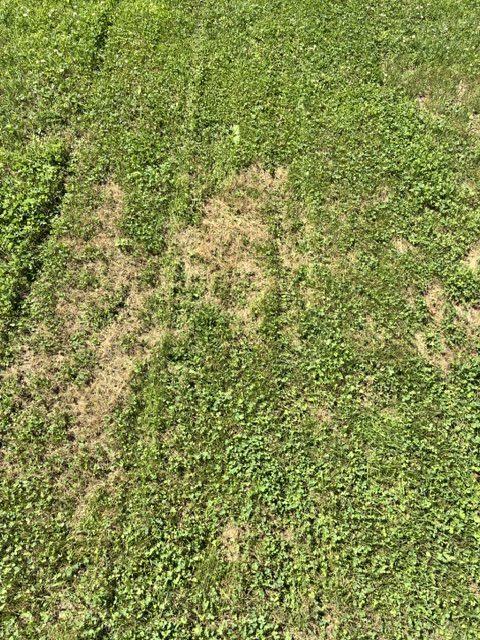
What are the drawbacks to consider?
- It attracts bees when flowering. Clover blossoms draw pollinators — a plus for the ecosystem, but worth weighing if you have bare feet or sting allergies in the yard. Mowing reduces flowering, and microclover flowers less than standard white clover.
- It can stain clothing — something to keep in mind with kids playing on it.
- It's a relatively short-lived perennial. Clover renews itself by spreading and reseeding, but a clover lawn benefits from an occasional overseed every few years to stay thick.
- Broadleaf weed killers kill it. Most broadleaf herbicides treat clover as a weed, so you can't use them on a clover lawn — weeding has to be more selective.
- It's not a pure high-wear sports turf on its own; for heavy play areas, a grass-and-clover mix holds up better than clover alone.
How do you plant a clover lawn?
Clover seed is tiny — on the order of half a million seeds per pound — so seeding rates are very low, and it's easy to overdo. You can sow clover into an existing lawn (overseeding) or mix it with grass seed for a new one. The essentials:
- Timing: like cool-season grass, clover does best seeded in late summer to early fall, with spring as the backup. It germinates once soil is reliably above the mid-40s°F. (See when to plant grass seed.)
- Contact: sow shallow and ensure good seed-to-soil contact — scratch up the surface first if you're overseeding into existing turf. (Our reseeding guide and overseeding guide cover the prep.)
- Moisture: keep the seedbed consistently moist until it's up; clover establishes best in cool, moist conditions on well-drained soil.
- After that, it spreads on its own via stolons and fills in.
Is a clover lawn right for you?
It comes down to how far you want to lean in — a touch of clover for lower inputs, a balanced grass-and-clover mix, or a clover-forward lawn — and that depends on your yard's sun, traffic, and your tolerance for flowers and bees. Run your yard through the LawnSeedPicker calculator and it will recommend a grass, a grass-and-clover blend, or a clover-forward mix to match — and tell you how much seed to use.
Find your clover or grass-and-clover mix →
For the grass side of a grass-and-clover mix, DoMyOwn carries tall fescue and other named blends with free shipping. For the clover side, Outsidepride Miniclover seed is available on Amazon.
Frequently asked questions
Is microclover better than regular clover for a lawn?
For a tidy, lawn-like look, usually yes — microclover has smaller leaves, grows lower and denser, and flowers less, so it blends into grass more uniformly. Regular white clover is hardier, establishes easily, and costs less, which suits a more natural or budget-conscious lawn.
Does a clover lawn attract bees?
Yes, when it's flowering — the blossoms draw pollinators. That's a benefit ecologically, but a consideration for bare feet or sting allergies. Mowing keeps flowering down, and microclover produces fewer flowers than standard white clover.
Do you need to fertilize a clover lawn?
Little to none. Clover fixes its own nitrogen and shares it with neighboring grass, so a clover or grass-and-clover lawn typically needs no nitrogen fertilizer.
How often do you have to reseed clover?
Clover is a relatively short-lived perennial, but it spreads by stolons and reseeds itself, so it largely self-renews. Overseeding lightly every few years keeps a clover lawn thick and even.
- USDA NRCS & Iowa State University Extension — White Clover (Trifolium repens) fact sheet.
- Penn State Extension — White Clover.
- Rutgers New Jersey Agricultural Experiment Station, Cooperative Extension — Turfgrass Seed and Seed Mixtures (Fact Sheet FS684).